 |
|
|
|
|
|
|
|
|
|
|
|
|
|
|
|
|
|
|
|
|
|
|
|
|
 |
|
|
|
|
|
|
|
|
|
|
|
Postmodernism's reality -- meaning unravels as easily as fervor held up to the scrutiny of
absurdity
|
|
|
|
|
|
|
|
|
 |
|
|
|
|
|
|
|
|
|
|
|

|
|
|
|
|
|
|
|
|
|
|
|
|
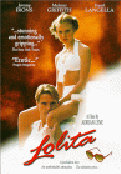
Ideas for your journal:
Which did you like more -- the movie or the novel? Why?
Which did you like more -- the original movie (directed by Stanley Kubrick) or the remake (directed by Adrian Line)? Why?
What is Lolita's role?
What makes Lolita (both the movie & the novel) an excursion into the perverse?
Humbert Humbert behaves in a perversely driven manner. In ordinary circumstances, he would be considered depraved, and would be a completely unsympathetic character. Why is his character strangely sympathetic? Why is the situation so humorous? Why isn't it tragic? How does Nabokov make the novel ironic, playful, and surreal rather than doggedly literal? What passages or scenes illustrate this?
|
|
|
|
|
|
|
|
|
 |
|
|
|
|
|
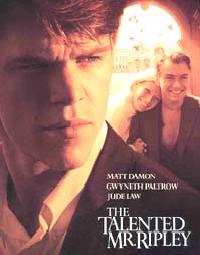
Another film about
obsession, the taboo, and the invention of identity
|
|
|
|
|
|
|
|
|
|
|
|
|
|
|
Dickie Greenleaf (Jude Law)
Tom Ripley (Matt Damon)
Marge (Gwyneth Paltrow)
How does the setting, locations, and costume provide clues about the nature of love and madness in this film?
Contrast Tom Ripley's living situation before he goes to Italy, to his situation after he arrives.
What is Tom Ripley's core obsession? What does he want to be and how does he attempt to make himself into that?
How does the film communicate "privilege" and how does the unattainability of privilege create desire and resentment, as well as a feeling of being relegated to the outside to Tom Ripley?
|
|
|
|
|
|
|
|
|
|
|
|
|
The Talented Mr. Ripley (dir. Anthony Minghella, 1999)
|
|
|
|
|
|
|
|
|
|
|